💖 Dating
From idea to launch: Creating a standout dating app for Kenya


Duration
5 months
Role
Strategic UX Designer, Product Manager
Services
Business opportunity identification, Product Strategy, Product Management, User Research, Product Design
Challenge
With a core business in encrypted internet infrastructure and global mobile signalling, FInk Telecom sought to diversify its revenue streams by creating digital products. Spotting an opportunity in Africa’s underserved dating app space—dominated by desktop-first platforms focused on international matchmaking—they aimed to create a locally relevant, mobile-first alternative.
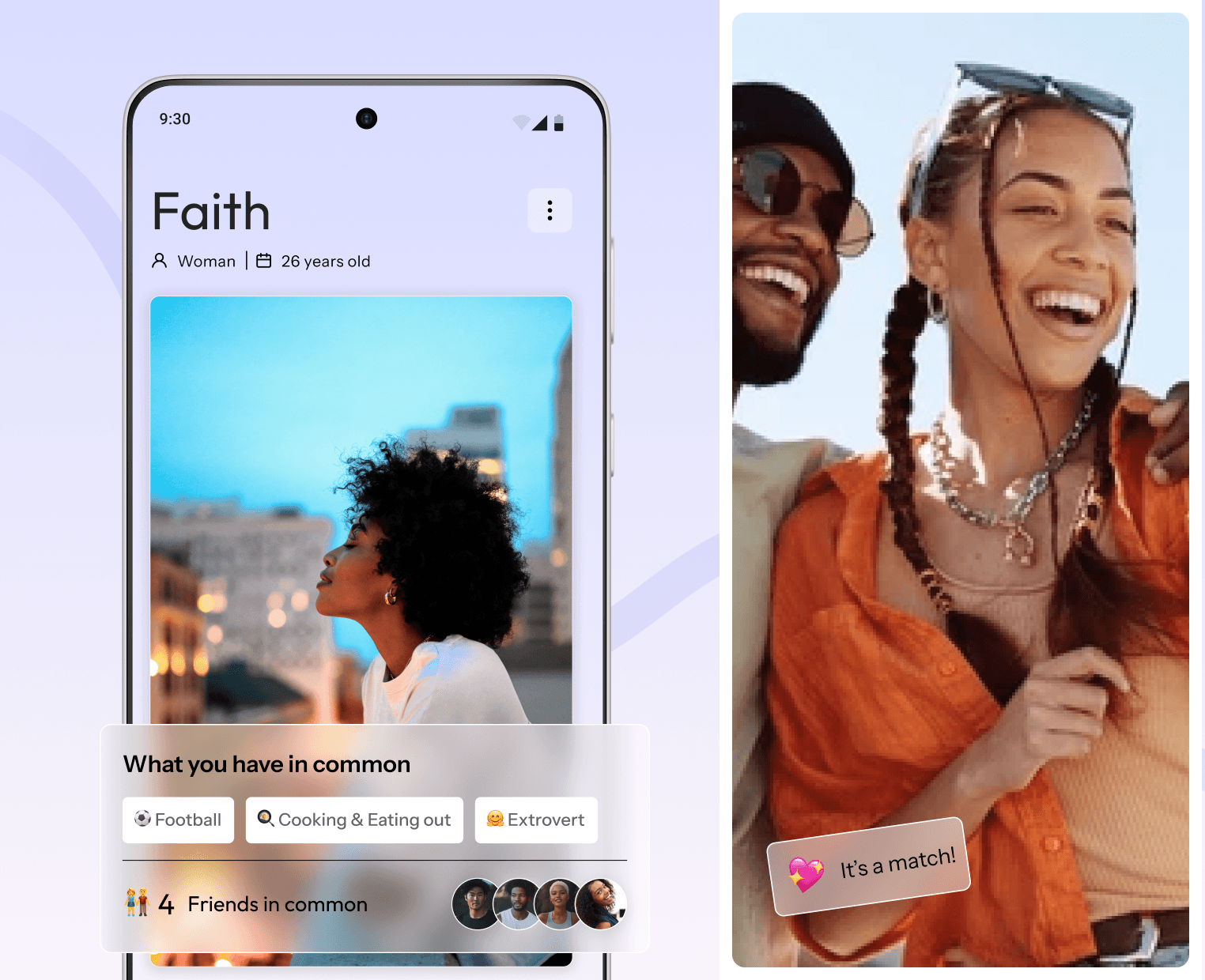
Lacking internal product expertise, the client needed a strategic partner to create alignment across the team, to help transform a vague idea into a launch-ready product.I led Fink Telekom through every stage of the product journey—from initial research and strategic positioning to UX design and go-to-market readiness—ensuring alignment between user needs, business goals, and market opportunities. Tukutane is the first Kenyan local dating app focused on community-first connections, bringing like-minded people together through fun activities.




The First Mission
The First Mission
The First Mission
Concept Development & Incubation
Conducted market and user research to develop differentiated dating app concepts, prioritising the one with the highest desirability.


(01)
Competitors' market research & Trends analysis
To identify white space opportunities, I conducted a comprehensive analysis of the dating app landscape in Kenya and Sierra Leone. This included benchmarking the top 10 most used apps to derive features benchmarking, market positioning mapping, competitors archetypes, and common business models. In parallel, I performed trend analysis to uncover evolving user behaviours, unmet needs, and shifts in customer expectations. The report included some key considerations to drive commercial success.

(02)
Customer Value Propositions
Competitors' market research & Trends analysis
Leveraging insights from customer research, trend analysis, and competitive benchmarking, I defined five opportunity areas. These served as a foundation for a co-creation workshop with the client team, where we developed three differentiated Customer Value Propositions.
To identify white space opportunities, I conducted a comprehensive analysis of the dating app landscape in Kenya and Sierra Leone. This included benchmarking the top 10 most used apps to derive features benchmarking, market positioning mapping, competitors archetypes, and common business models. In parallel, I performed trend analysis to uncover evolving user behaviours, unmet needs, and shifts in customer expectations. The report included some key considerations to drive commercial success.
(02)
Customer Value Propositions
Leveraging insights from customer research, trend analysis, and competitive benchmarking, I defined five opportunity areas. These served as a foundation for a co-creation workshop with the client team, where we developed three differentiated Customer Value Propositions.

(03)
Qualitative user research
To evaluate the desirability of three proposed value propositions, I conducted 10 45-minute one-on-one qualitative interviews with Kenyan singles. Combining discovery and validation methods, I explored dating behaviours, user expectations and gathered feedback on feature preferences and concept improvements.
Tukutane emerged as the most favoured concept, selected by 55% of participants. Users appreciated its versatility—supporting both romantic and platonic connections—and emphasised the importance of shared hobbies as a key driver for meaningful interactions. Meeting in person was also a strong preference, cited as a way to avoid fraud and misalignment, which users identified as major pain points in existing platforms.

(04)
Social Testing
Our social testing aimed to validate two critical assumptions: market appeal and willingness to pay, while also identifying which branding and messaging resonated most with our target audience. Over five days, we ran 4video ad variants on Facebook and Instagram with a daily budget of €35. Each campaign directed traffic to one of two landing pages, each linked to a customised Typeform sign-up form.
This allowed us to collect user data and insights on pricing sensitivity and preferred activities.
The overall funnel conversion rate was 0.55%—lower than expected—likely due to friction in the user journey and a high trust barrier. This highlighted the importance of strong social proof and a clearly articulated value proposition when launching new apps in this market.
We tested two brand identities and two messaging directions—"Community" vs. "Love". Brand 1 outperformed Brand 2 significantly in cost per acquisition, and the "Community" message yielded the highest click-through rates across both brands. These insights informed our decision to move forward with Brand 1 and a community-first positioning.
Additionally, the testing helped identify our core target audience: users aged 25–34 with strong interests in football, fitness, and food culture. Our assumption about price sensitivity was validated, with 100% of respondents indicating willingness to pay between 140–300 KSH.
(03)
Qualitative user research
To evaluate the desirability of three proposed value propositions, I conducted 10 45-minute one-on-one qualitative interviews with Kenyan singles. Combining discovery and validation methods, I explored dating behaviours, user expectations and gathered feedback on feature preferences and concept improvements.
Tukutane emerged as the most favoured concept, selected by 55% of participants. Users appreciated its versatility—supporting both romantic and platonic connections—and emphasised the importance of shared hobbies as a key driver for meaningful interactions. Meeting in person was also a strong preference, cited as a way to avoid fraud and misalignment, which users identified as major pain points in existing platforms.
(04)
Social testing
Our social testing aimed to validate two critical assumptions: market appeal and willingness to pay, while also identifying which branding and messaging resonated most with our target audience. Over five days, we ran 4video ad variants on Facebook and Instagram with a daily budget of €35. Each campaign directed traffic to one of two landing pages, each linked to a customised Typeform sign-up form.
This allowed us to collect user data and insights on pricing sensitivity and preferred activities.
The overall funnel conversion rate was 0.55%—lower than expected—likely due to friction in the user journey and a high trust barrier. This highlighted the importance of strong social proof and a clearly articulated value proposition when launching new apps in this market.
We tested two brand identities and two messaging directions—"Community" vs. "Love". Brand 1 outperformed Brand 2 significantly in cost per acquisition, and the "Community" message yielded the highest click-through rates across both brands. These insights informed our decision to move forward with Brand 1 and a community-first positioning.
Additionally, the testing helped identify our core target audience: users aged 25–34 with strong interests in football, fitness, and food culture. Our assumption about price sensitivity was validated, with 100% of respondents indicating willingness to pay between 140–300 KSH.
The Second Mission
The Second Mission
The Second Mission
Product Design
Creating the user experience for the MVP launch

(01)
Features prioritisation & Roadmapping
I structured the product scope into 7 epics and 45 user stories, categorised by feature type. Using an impact–effort matrix that accounted for both technical and design complexity, I prioritised features across four roadmap phases: MVP Launch, Monetisation, Growth, and Engagement Deepening.
In the initial development phase, the focus was on delivering core hygiene features that fulfilled our unique value proposition. This included the matching mechanism, event discovery and creation tools, and foundational security features—planned for the first sprint.
Looking ahead, the roadmap included features aimed at long-term differentiation and retention: community-building tools, pre-event engagement experiences, and in-app advice tailored to modern dating challenges.

(02)
User journeys & Wireframes
For each feature, detailed user flows were mapped out to illustrate the steps users take to achieve specific goals. Both happy paths and edge cases were considered to ensure a comprehensive understanding of user interactions and inform the information architecture.
Within 2 weeks, a low-fidelity prototype consisting of 83 screens was developed to visualise the core features and user flows of the app. This prototype served as a foundation for validating the experience and aligning the team on functionality.
Based on the winning brand direction from social testing, two distinct UI design routes were then explored. These concepts tested variations in layout, navigation patterns, visual language, and key intersectional screens to guide the final UI design language.

(03)
Ready to develop UI design
With Android accounting for 94% of smartphone usage in Kenya, I adopted an Android-first approach for the product launch. This ensured alignment with local usage patterns and maximised accessibility from day one. All final UI screens for the MVP—covering edge cases and supported by developer-ready documentation—were completed within a month. The documentation clearly outlined page structure, empty states, and interaction behaviour to streamline implementation.
Recognising the widespread use of multiple devices in Kenya, I simultaneously designed a responsive web app to support cross-platform engagement.
To enable long-term scalability, I created an initial design system focused on consistency and reusability. This system laid the groundwork for future iterations, reducing design and development effort.

(04)
Landing page & Social media assets
The discovery of a competitor using a similar name and concept prompted us to act quickly to strengthen Tukutane’s digital presence and establish brand authority early. Our goal was to minimise confusion and render the competitor insignificant by positioning Tukutane as the clear, differentiated choice.
To support this, we redesigned the Tukutane.com landing page to clearly communicate the app’s unique benefits and value proposition. The updated page was tailored to attract early adopters and generate leads for our Alpha testing community in Nairobi. To reduce friction in sign-ups, the form was simplified to a single email input, maximising conversion.
In parallel, we launched Tukutane’s social media accounts to enhance discoverability, build early brand awareness, and support SEO through consistent and relevant content across platforms.
(02)
User journeys & Wireframes
For each feature, detailed user flows were mapped out to illustrate the steps users take to achieve specific goals. Both happy paths and edge cases were considered to ensure a comprehensive understanding of user interactions and inform the information architecture.
Within 2 weeks, a low-fidelity prototype consisting of 83 screens was developed to visualise the core features and user flows of the app. This prototype served as a foundation for validating the experience and aligning the team on functionality.
Based on the winning brand direction from social testing, two distinct UI design routes were then explored. These concepts tested variations in layout, navigation patterns, visual language, and key intersectional screens to guide the final UI design language.
(03)
Ready to develop UI design
With Android accounting for 94% of smartphone usage in Kenya, I adopted an Android-first approach for the product launch. This ensured alignment with local usage patterns and maximised accessibility from day one. All final UI screens for the MVP—covering edge cases and supported by developer-ready documentation—were completed within a month. The documentation clearly outlined page structure, empty states, and interaction behaviour to streamline implementation.
Recognising the widespread use of multiple devices in Kenya, I simultaneously designed a responsive web app to support cross-platform engagement.
To enable long-term scalability, I created an initial design system focused on consistency and reusability. This system laid the groundwork for future iterations, reducing design and development effort.
(04)
Landing page & Social media assets
The discovery of a competitor using a similar name and concept prompted us to act quickly to strengthen Tukutane’s digital presence and establish brand authority early. Our goal was to minimise confusion and render the competitor insignificant by positioning Tukutane as the clear, differentiated choice.
To support this, we redesigned the Tukutane.com landing page to clearly communicate the app’s unique benefits and value proposition. The updated page was tailored to attract early adopters and generate leads for our Alpha testing community in Nairobi. To reduce friction in sign-ups, the form was simplified to a single email input, maximising conversion.
In parallel, we launched Tukutane’s social media accounts to enhance discoverability, build early brand awareness, and support SEO through consistent and relevant content across platforms.
Outcomes
Within 5 months, we brought to life a fully differentiated dating app concept tailored for the Kenyan market, ready for launch on the Google Play Store. Based on strong enthusiasm expressed during user interviews, early adopters showed clear interest in both using and paying for the app.The project is now poised for launch, with plans to onboard a pilot user base in Nairobi to validate live product performance and retention.
Latest Projects
Latest Projects
Latest Projects