🎓 Education

Duration
1 week
Role
UX/UI Designer
Services
Business opportunity identification, Design thinking facilitation, User Research, Product Design
Challenge
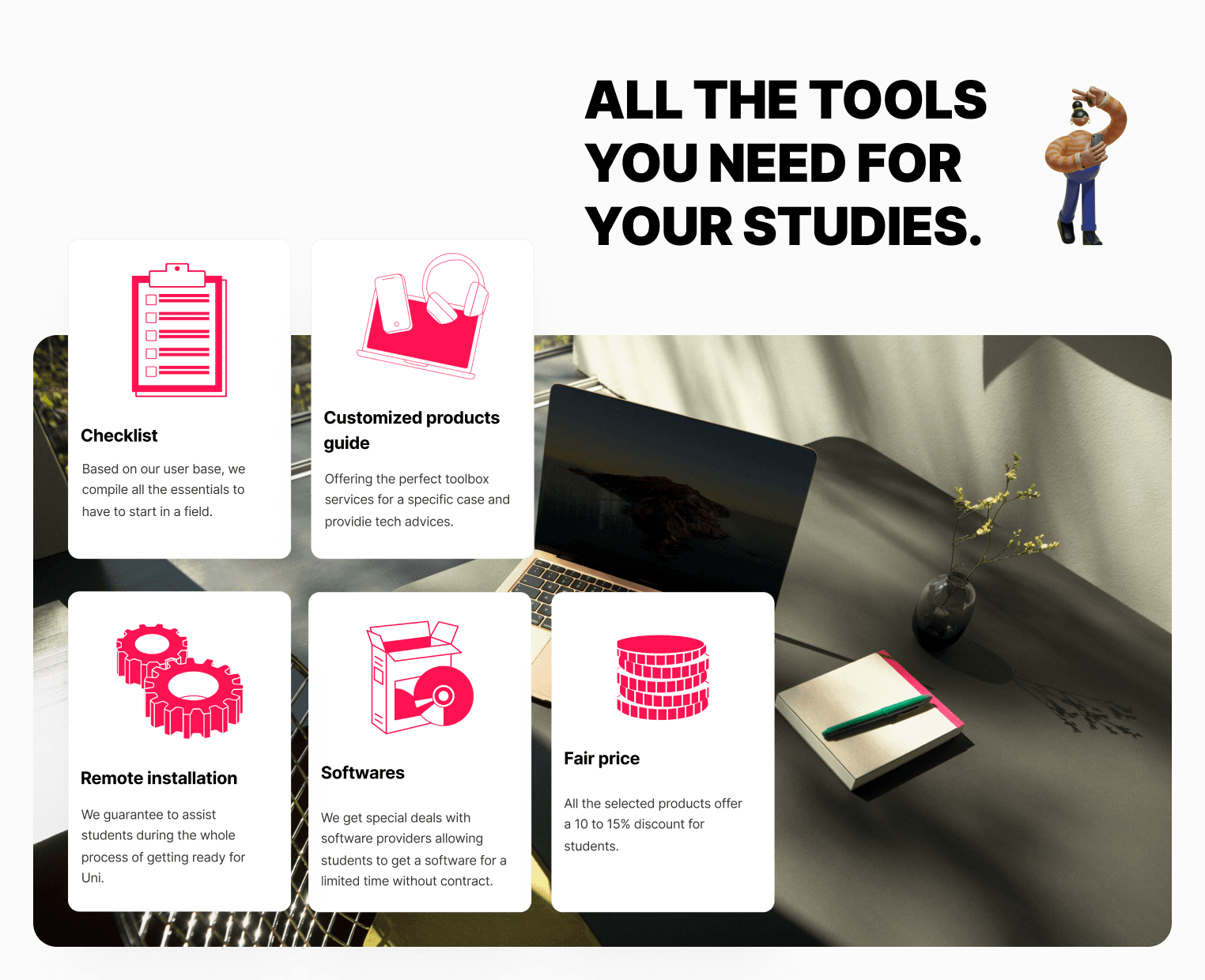
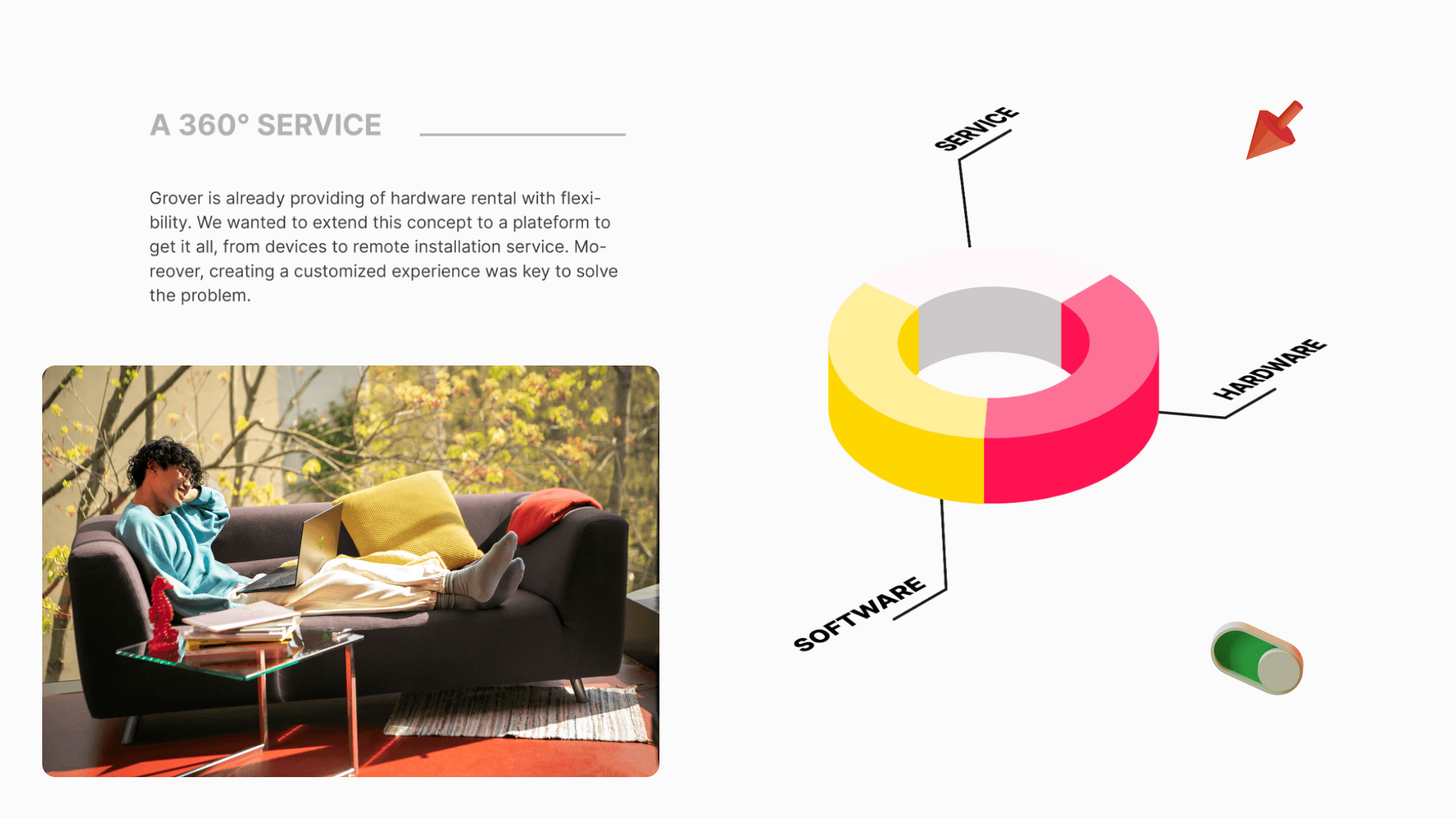
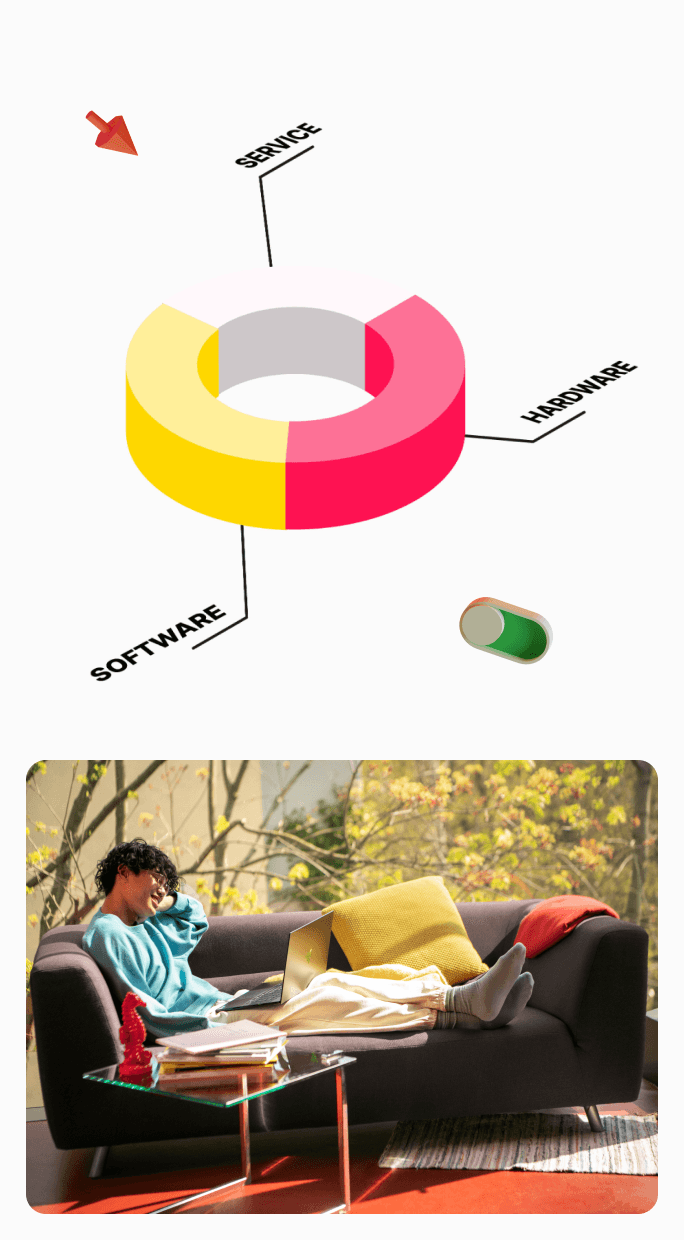
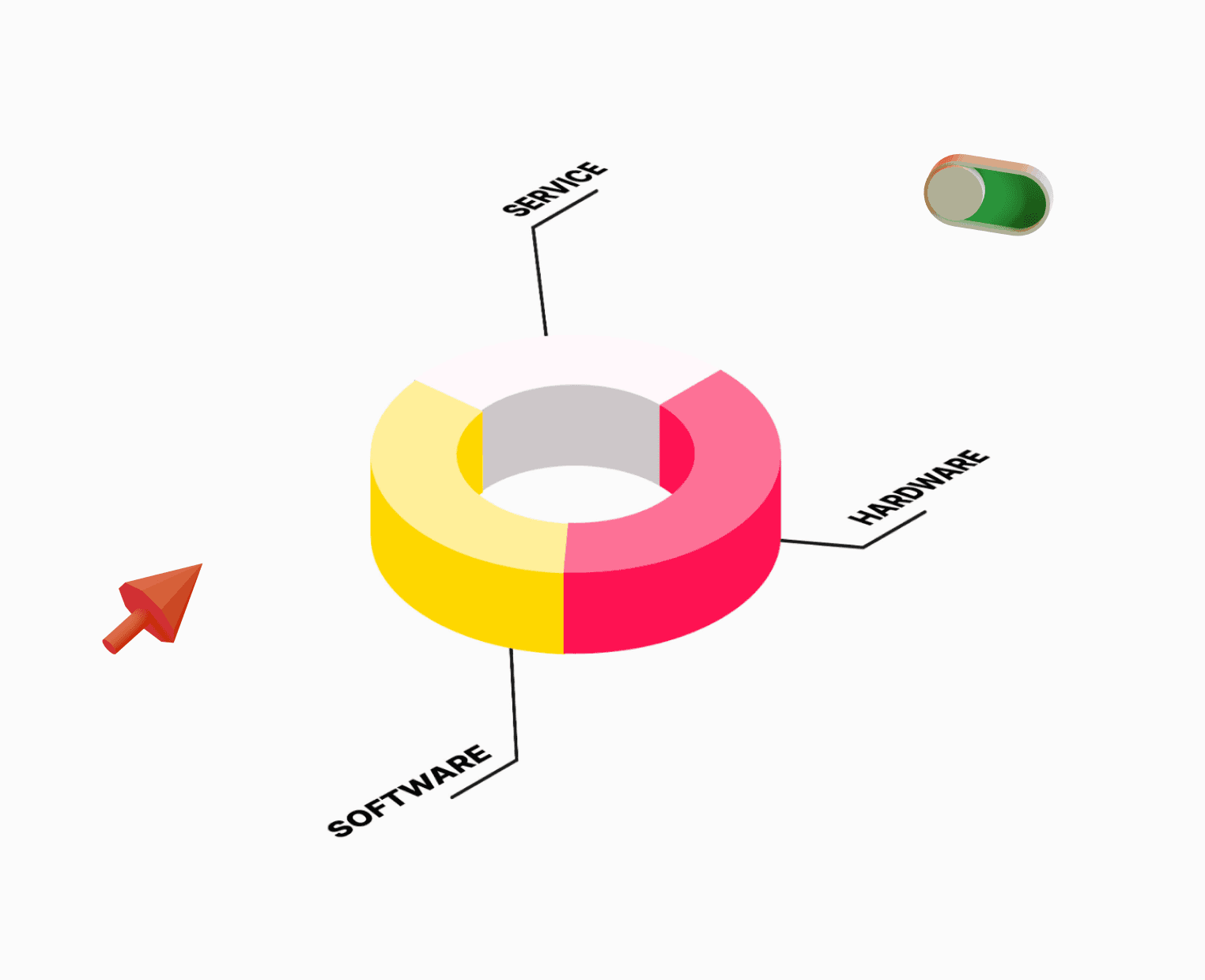
During a 2 days hackathon, we reflected as a team of 7 on a solution to give access to all the tech students need for an affordable price in a time when homeschooling became the norm due to Covid. Grover is already providing hardware rental with flexibility. We wanted to extend this concept to a platform to get it all, from devices to remote installation service. Grover Education is a 360° solution for students to access digital education with value, putting flexibility at its core.

Problem Space Discovery
Understanding the needs and pain points of our target audience through user & market research
(01)
Brainstorming
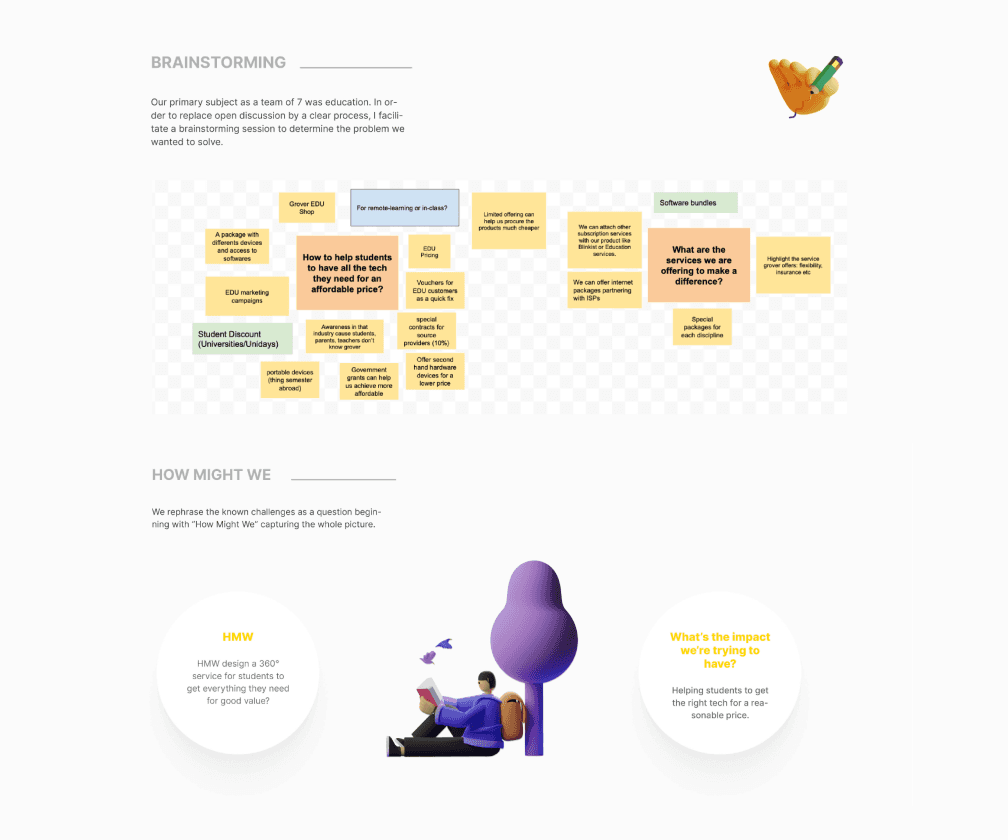
Our primary topic for the hackathon was education and we wanted to understand how Grover could play a role in this space by brainstorming the problem we tried to solve as a team. I facilitated a workshop session to uncover current students’ problems and gather contextual elements. We rephrased the known challenges as an HMW question and created a mission statement to create alignment within the team.
(02)
User Research
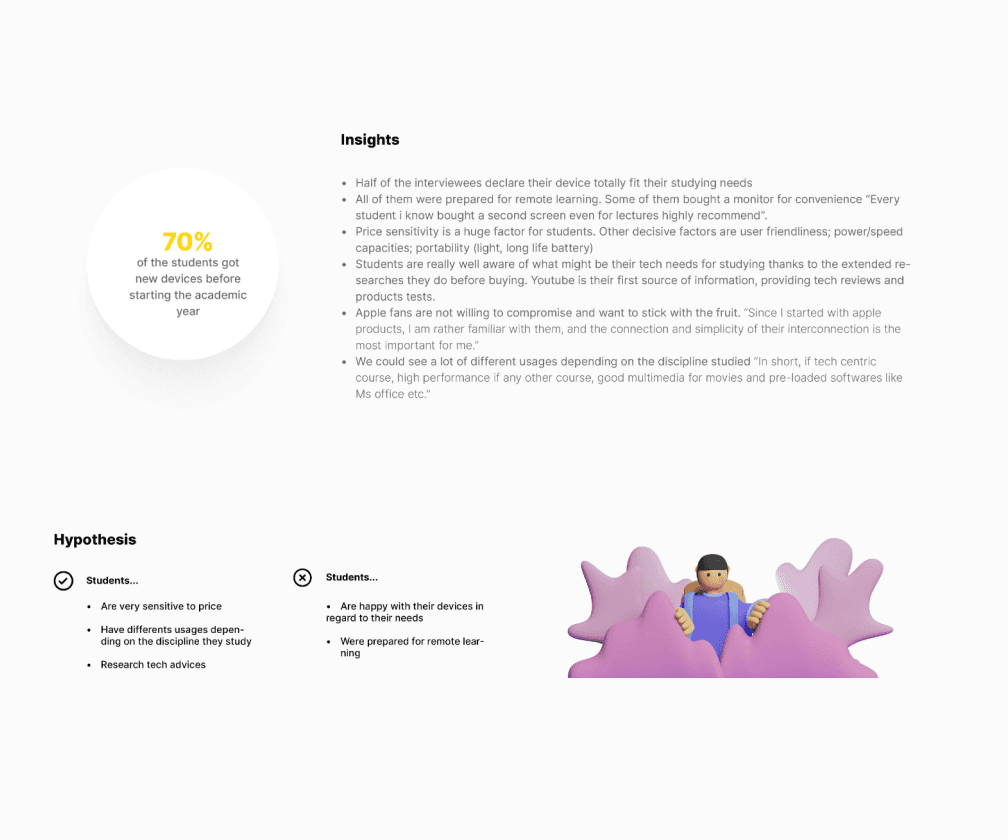
I interviewed 17 respondents to validate our initial hypothesis and gain insights into users' needs and pain points. This process revealed that 70% of students acquire new devices before the academic year begins. While we confirmed our initial assumptions about price sensitivity and alignment with their fields of study being key factors in their purchasing decisions, we also identified additional criteria influencing their choices, including brand, portability, and power/speed capacity…
(03)
Personas
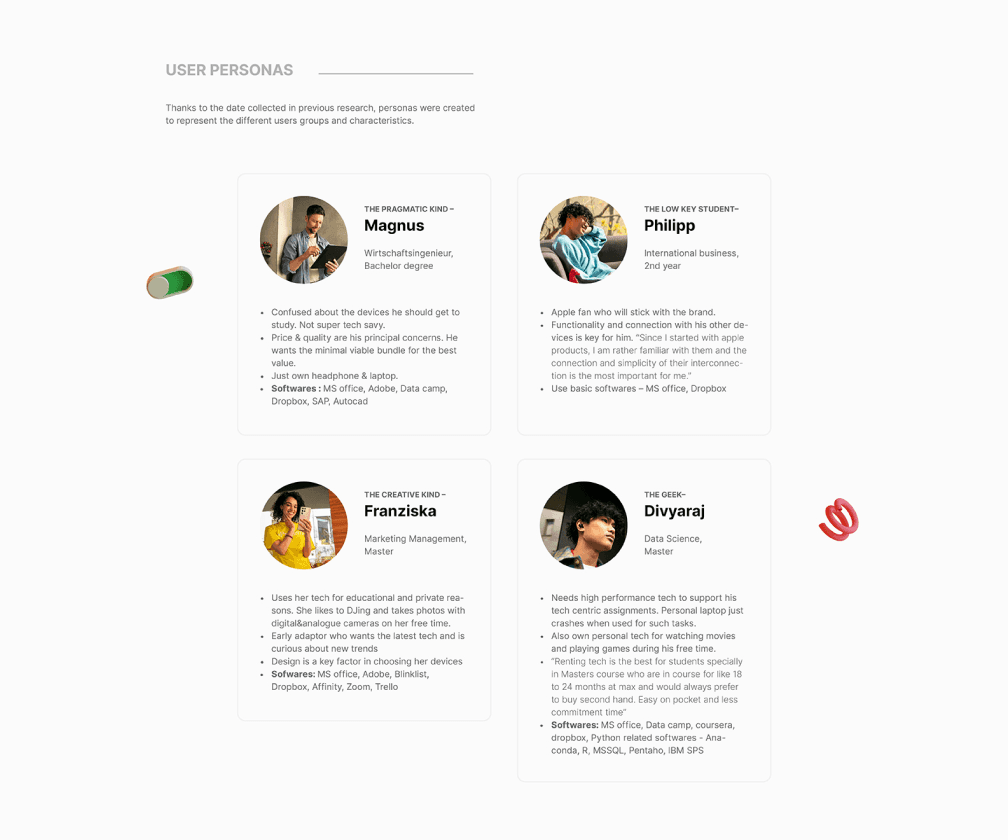
Thanks to the data collected during interviews, I created 4 personas representative of the different identified users’ groups, highlighting the different drivers & decision factors depending on discipline studies and behavioural characteristics.
(04)
User Journey Map
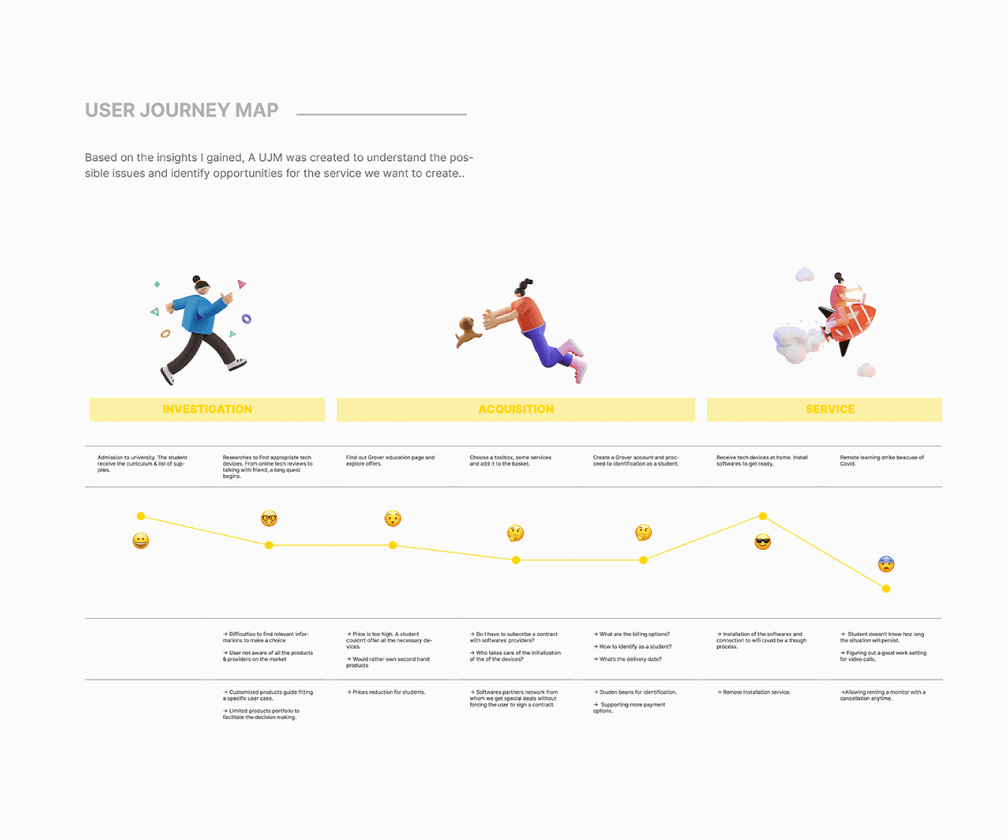
Based on the insights I gained during research, I created a user journey map of how Grover Education service could work, mapping out for each step feelings, users’ pain points and potential opportunities areas.
MVP Definition
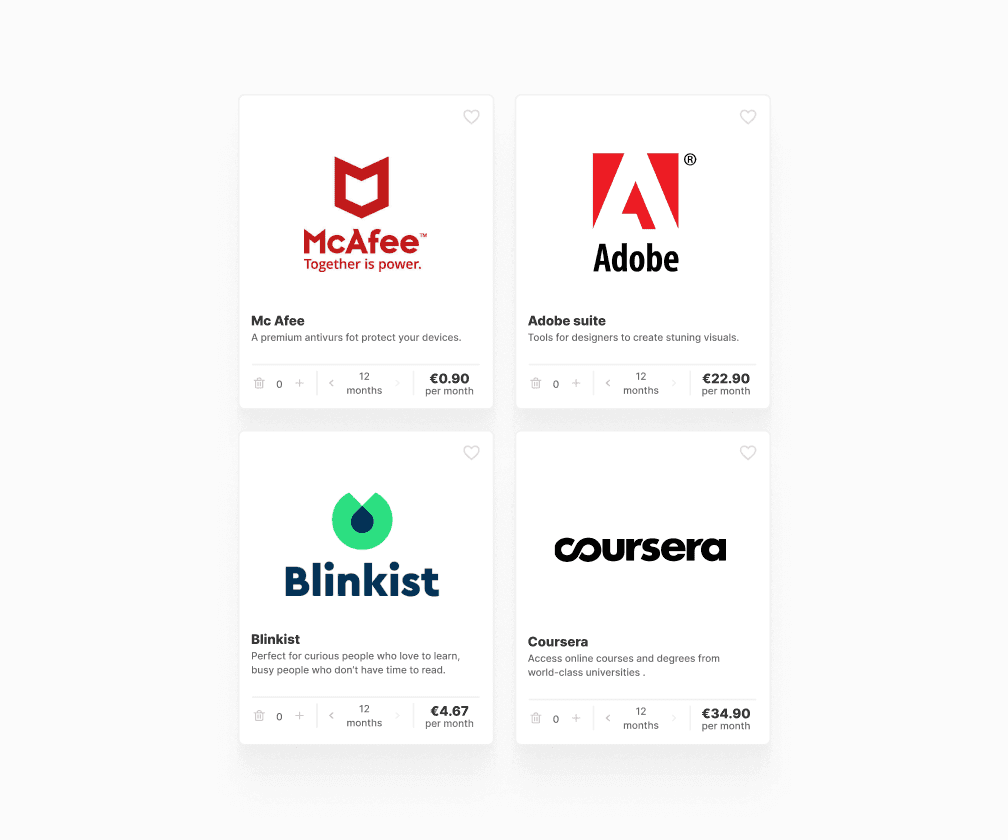
Defining the feature for a new tech rental service & designing a user-centred experience with personalization at its heart
(01)
Features Definition
(02)
Toolboxes
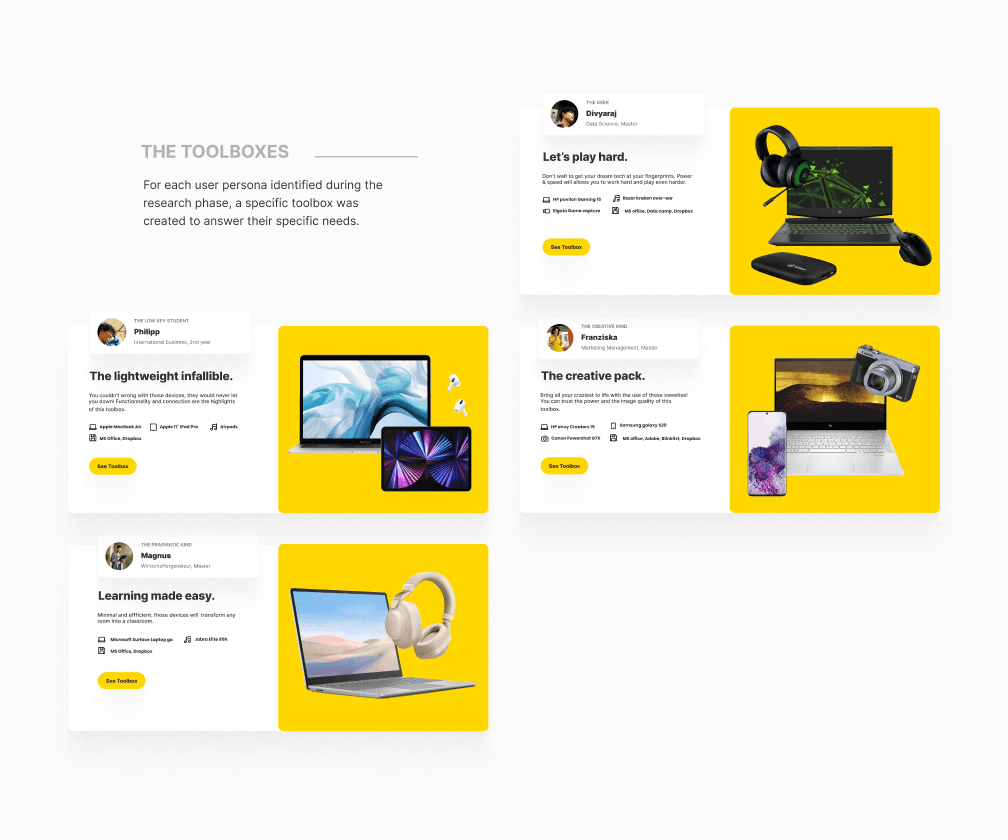
To offer users a personalized selection of products and software—referred to as the "toolbox"—we developed a test based on the responses from different user groups during our research. For each identified user case, we created a tailored toolbox designed to meet their specific needs. Each toolbox includes a combination of devices and software subscriptions.
(03)
Proof of Concept
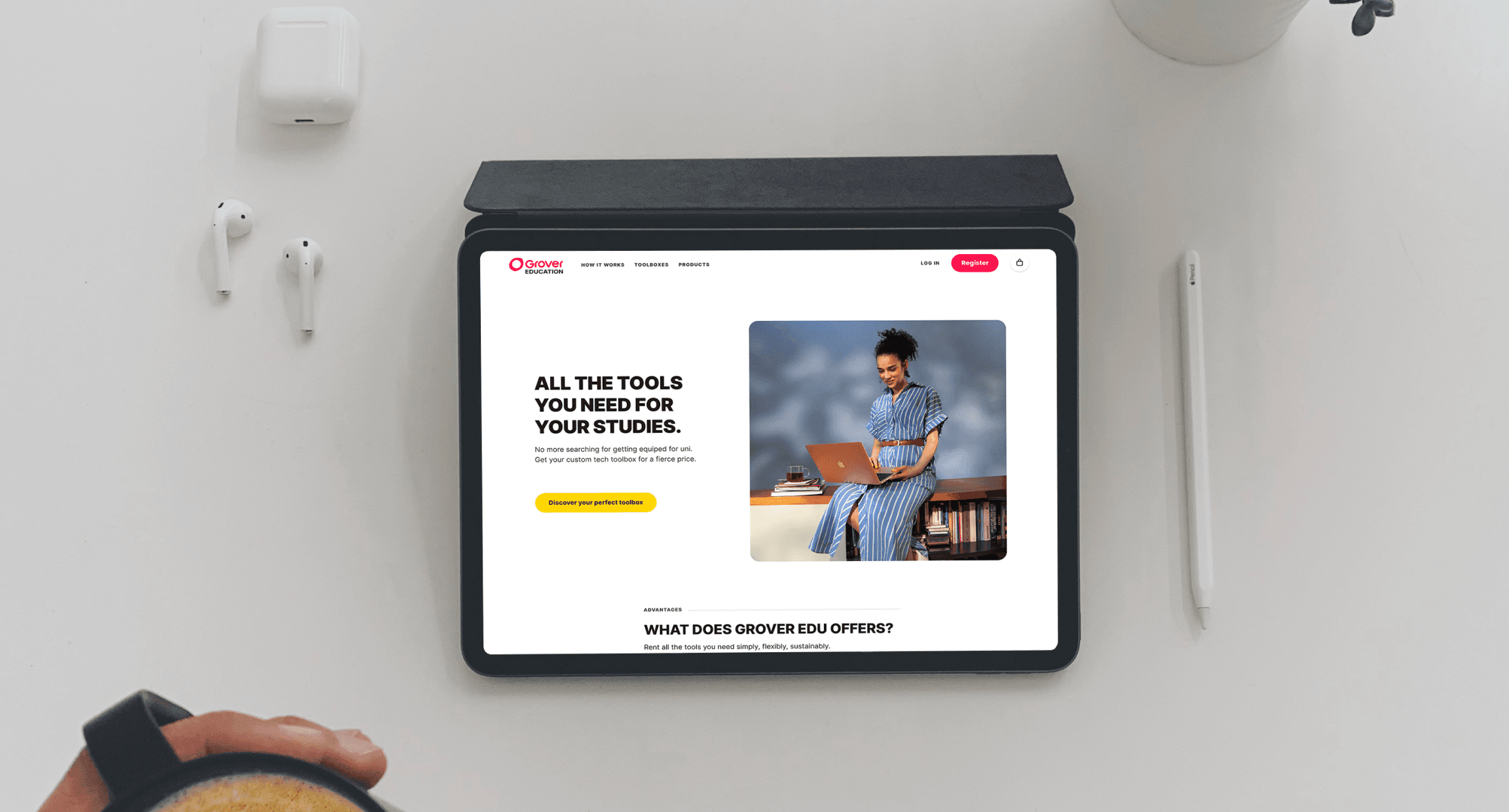
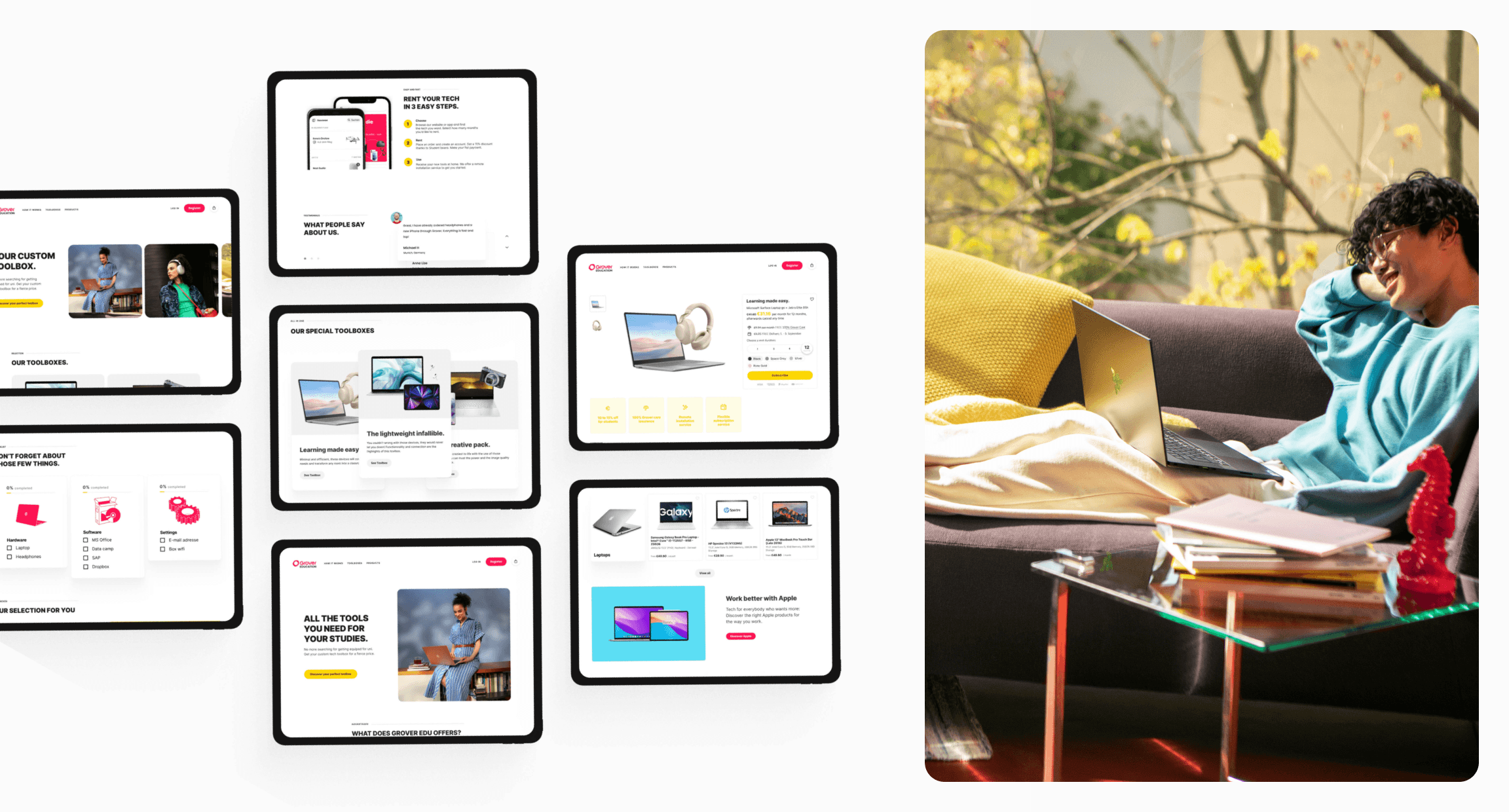
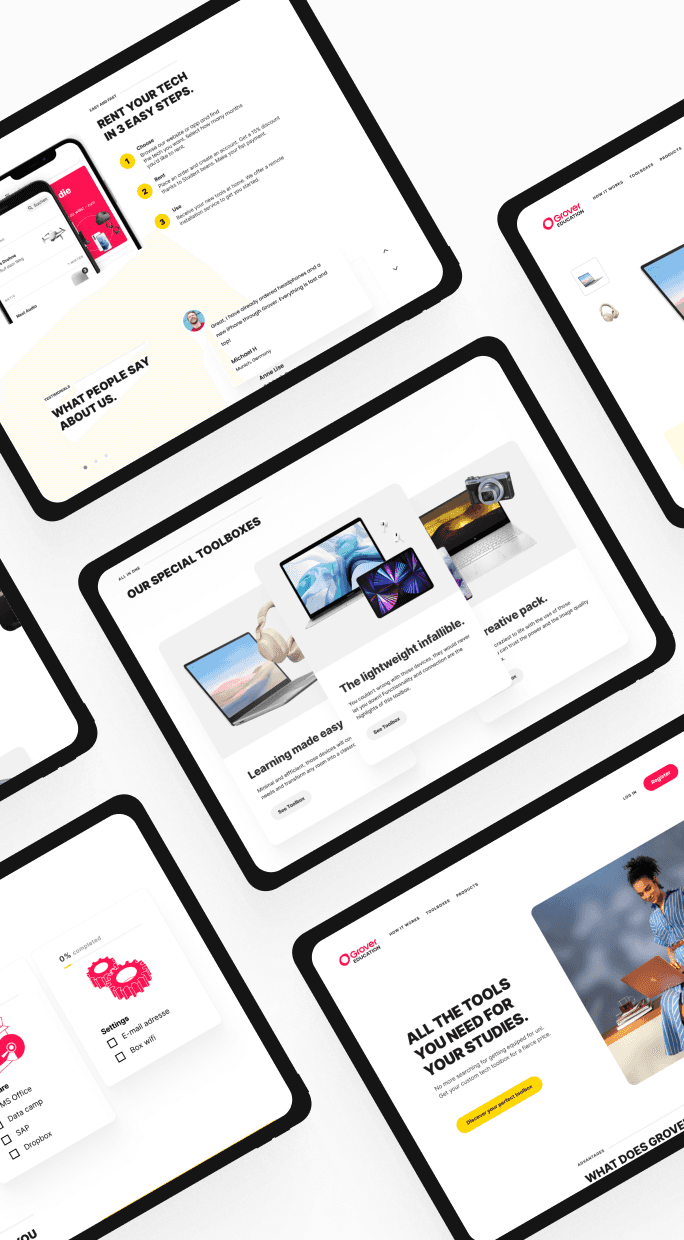
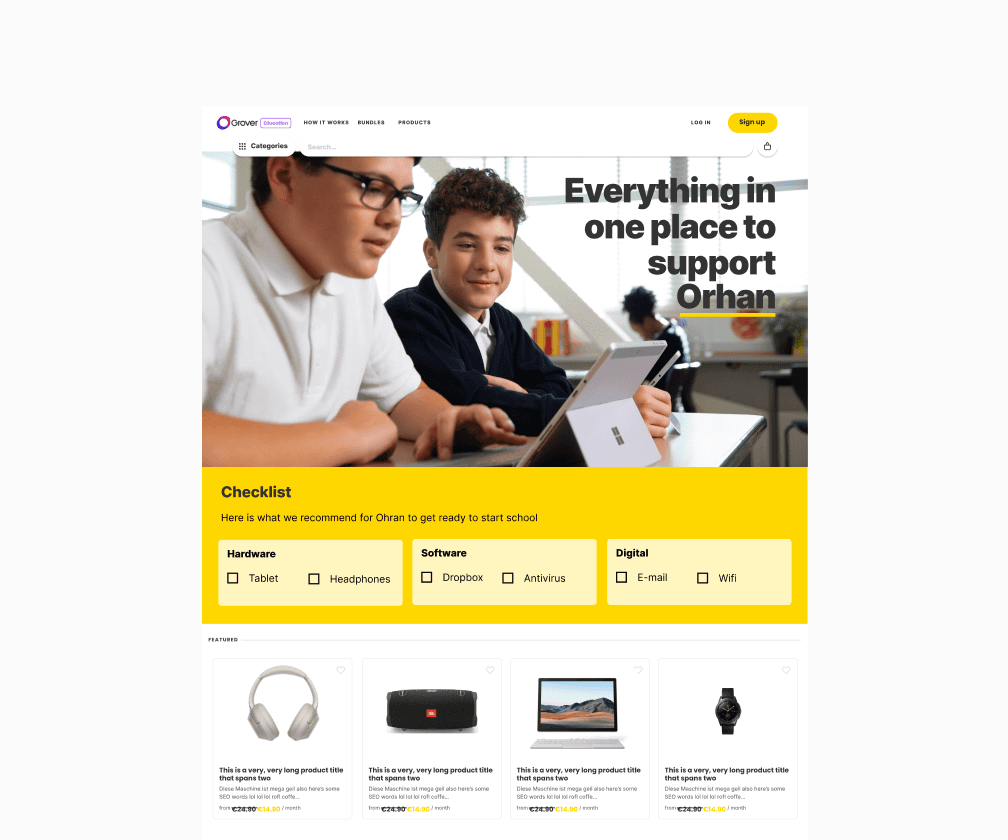
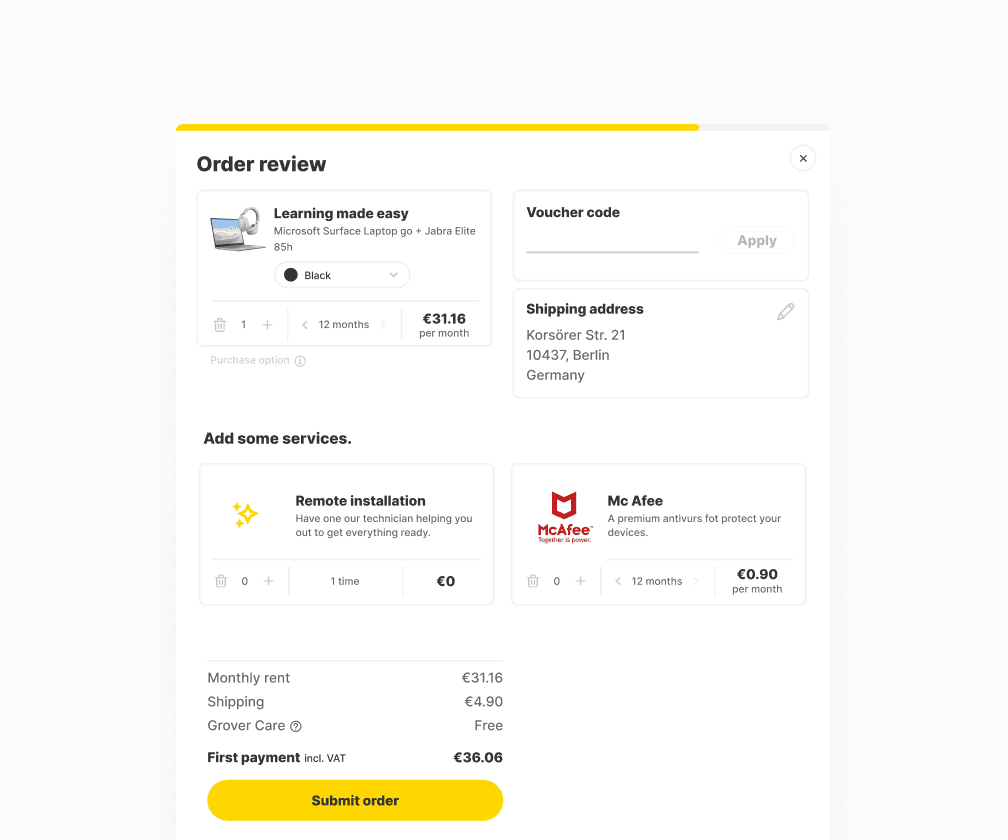
In just one day, I designed a prototype to serve as a proof of concept. The microsite's architecture includes a product page featuring a curated selection of discounted items, a toolbox page that showcases various bundles and additional services, and a personal page accessible to registered users.
(04)
UX Refinements
After presenting the proof of concept prototype, it became evident that the design's true value lay in the personalized page that summarized each user's needs. This insight prompted me to create a new version focused entirely on enhancing personalization.
Initially, the user flow included an onboarding quiz presented as a pop-up window on the homepage. However, the limited questions did not provide enough depth to offer valuable recommendations. To enhance the user experience while reducing cognitive load and abandonment rates, I replaced the pop-up quiz with a CTA on the homepage that directs users to a more comprehensive toolbox quiz featuring five targeted questions.
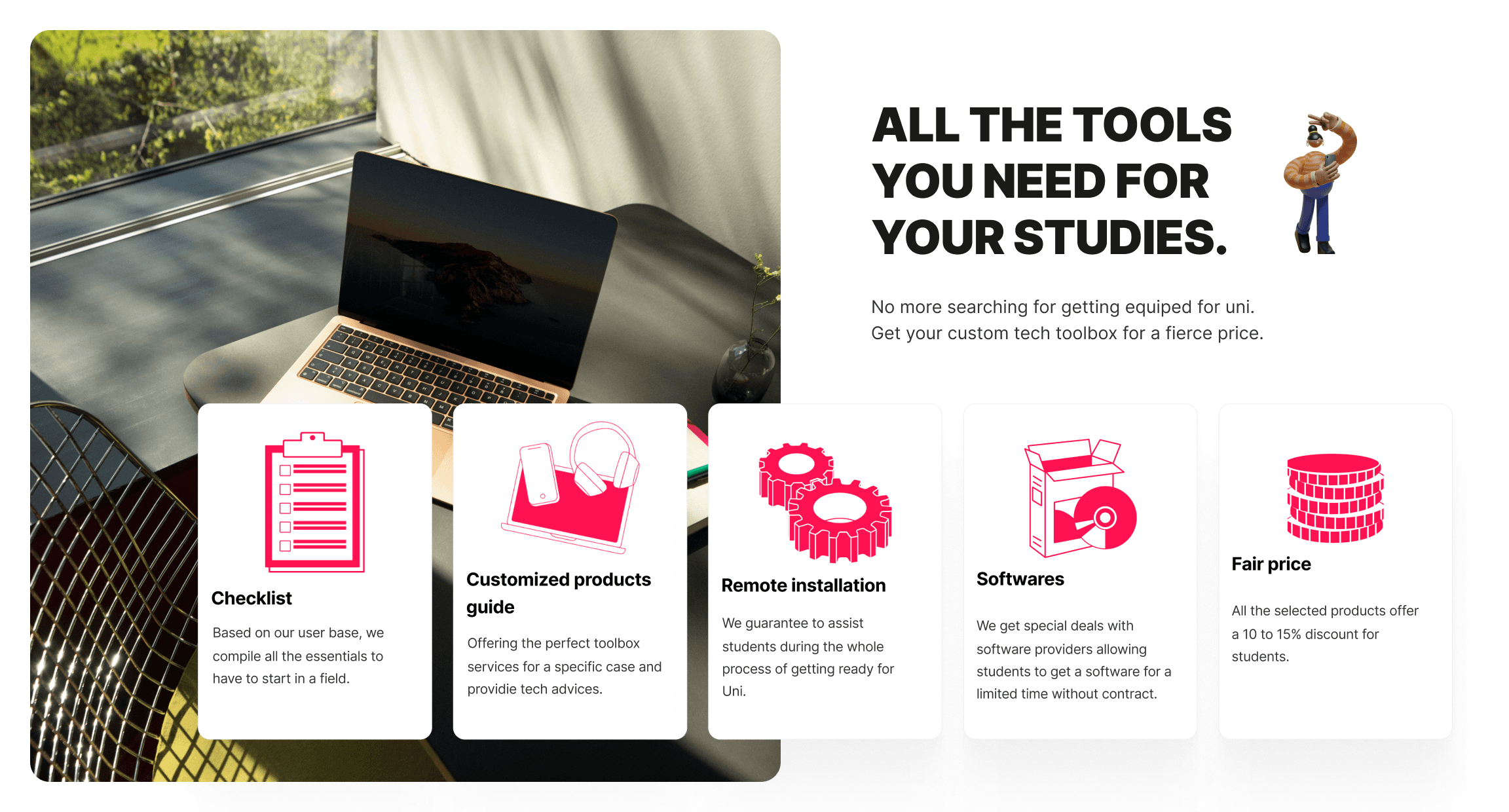
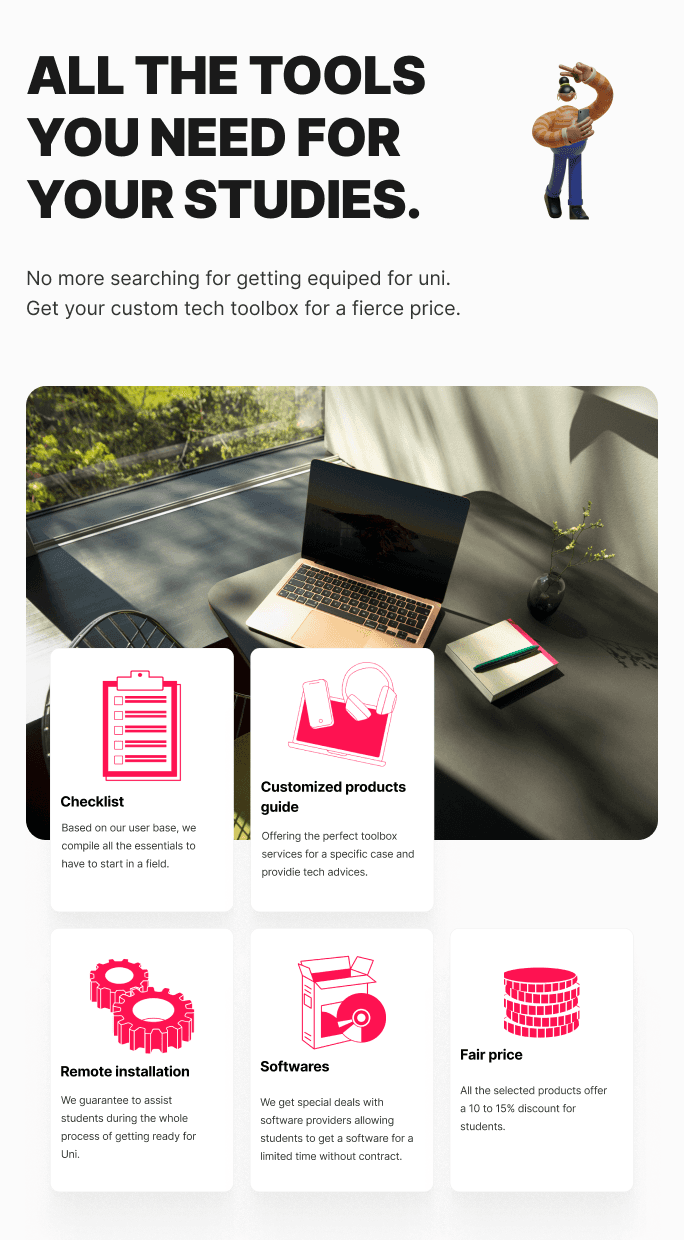
Additionally, I recognized that a checklist feature on the personal page was an overlooked design element that needed further development. This feature addresses our goal of providing students with clear guidance on the steps to take before starting university.
Outcomes
Although Grover aims to create an offer specifically for students, the project was not implemented. Following the hackathon, several simpler initiatives were launched, among which was a partnership with Studentbeans, enabling students to access discounts on tech rental.